The NTEU has a new report out today forecasting some alarmingly long HELP debt repayment times, including over 40 years in some high student contribution courses. While I agree that this issue needs attention – and have proposed linking student contributions with expected repayment times to narrow the course-linked differences between them – I think the NTEU forecasts are much longer than will typically happen in practice.
The key problem is how the NTEU models expected graduate income. In their report they take starting salaries and then increase them each year by average wage growth over the last decade, 2.3 per cent on their figures.
However graduate incomes usually increase by much more than that. Indeed, the financial value of a degree is opportunities for continuing income growth when the wages of people without degrees tend to plateau after a decade or so in the labour force.
Graduate career wages
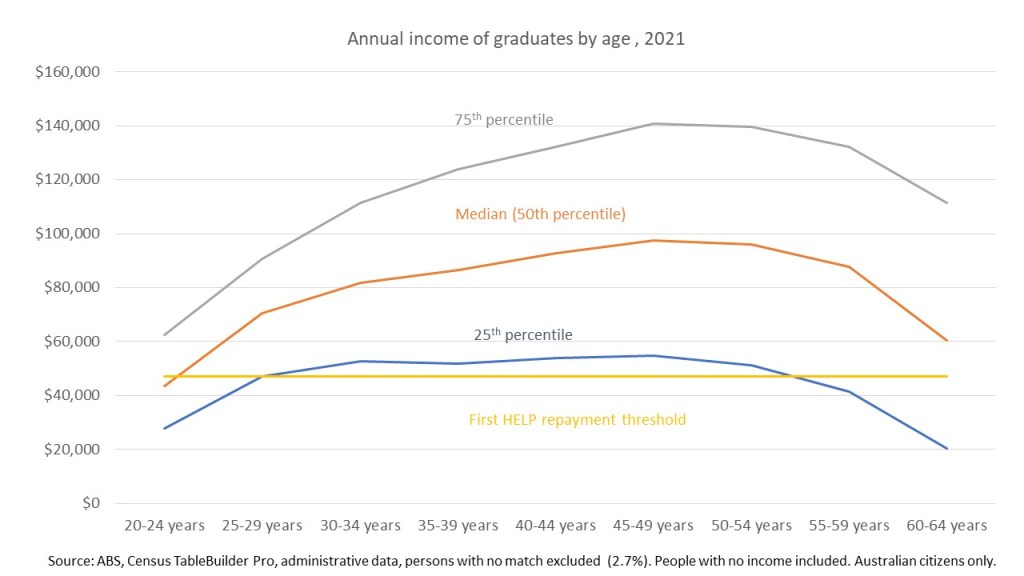
Recently the ABS added ATO and DSS derived income data to the Census dataset, allowing more detailed analysis of income than was previously possible. As the chart below shows for graduates at the median and 75th percentile income does not peak until age 45-49 years, after doubling between the early 20s and late 30s.
The next chart looks at median income by single year of age in the early career period when most HELP debt is repaid. Initial income levels look affected by people in jobs that don’t require degrees, but as professional careers start and graduates are promoted or switch to better jobs income increases rapidly.
Read More » Andrew Norton