The last university over-enrolment crackdown – some possible lessons

As announced last year, the government plans to crack down on so-called ‘over-enrolments’ – enrolling additional students on a student-contribution only basis once all a university’s Commonwealth Grant Scheme allocation has been used.

When a proposed new funding system is in place, from 2027, student contribution-only places will only be possible in a buffer zone above a university’s Australian Tertiary Education Commission allocation. 2% and 5% buffers have both been suggested. Currently over-enrolled universities will receive some additional funding to bring over-enrolments within their official allocation of places. However, this will not in all cases reduce over-enrolments to the permitted range. Significantly over-enrolled universities need to moderate student intakes in 2026 to bring their medium-term enrolments down.

Not many current Department of Education staff were there the last time a minister thought reducing over-enrolments might be a good idea. The story is worth telling.

Brendan Nelson and over-enrolment

From November 2001 to January 2006 the education minister was Brendan Nelson, a Liberal. Nelson was worried about the quality implications of significant over-enrolments. The first reference I can find to Nelson’s concern is in a media release from December 2001, a month into his term.

Read More »

Mapping Australian higher education 2023 – data update March 2025

Update 20/12/2025: More recent data here.

—————————————————————————————————

I won’t have the capacity to produce another edition of my Mapping Australian higher education report in the foreseeable future, but I am extending the life of the October 2023 edition by updating the data behind the charts.

Mapping‘s chart data is the only publicly-available source of long-term time series data on many higher education topics, especially on financial matters.

I had been waiting on the 2023 university finances report before releasing another chart data update. That finally happened yesterday. Despite a record 27 universities reporting deficits, in the aggregate there was a small surplus, after a loss overall in 2022.

2023 had some weak numbers for the two main Commonwealth student programs, the Commonwealth Grant Scheme and HELP. Several factors were behind this: temporary COVID places coming out of the system, Job-ready Graduates reductions in total funding rates for some courses, and weak domestic demand. These programs trended up in 2024 and 2025, as seen in the chart below, although high CPI-driven indexation was a significant factor.

The updated chart data is available here.

Robert Menzies and the Murray review of universities

An earlier post looked at Robert Menzies and higher education, first as Opposition leader and then as Prime Minister, from 1945 to 1956. Despite important structural changes in the early 1950s, with the Commonwealth commencing grants to universities via the states and directly financing Commonwealth scholarships, the university sector remained small and financially weak.

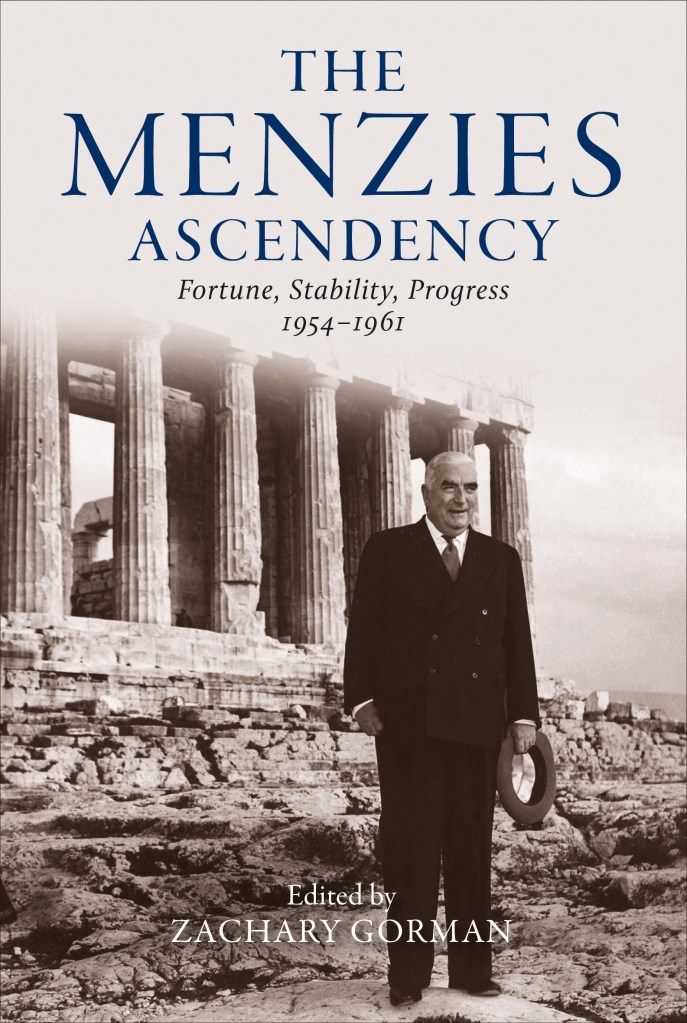
In March 1956, Menzies agreed to a university policy review, what became the Murray report. This post draws on my chapter on the Murray report in The Menzies Ascendancy: Fortune, Stability, Progress 1954–1961, edited by Zachary Gorman and published last month.

The appointment of Keith Murray to review universities

By the time Menzies agreed to the review he had already decided that major changes to university policy were needed.

In his book The Measure of the Years, Menzies says that prior to his trip to England in 1956, where he first met Keith Murray in person, he told Treasurer Artie Fadden that he was initiating an enterprise that could not fail to be ‘vastly expensive’.

In December 1956 Murray was appointed as chairman. The four other members included CSIRO Chairman Ian Clunies-Ross, believed to be the subsequent report’s main author.

Read More »

Robert Menzies and higher education, 1945 to 1956

I’m not an historian, but decided to accept a Robert Menzies Institute suggestion that I give a paper on the 1957 Murray report on universities for their 2023 conference on Menzies, which covered the years from 1954 to 1961. The book chapter version of that paper came out in December 2024.

As well as describing events surrounding the Murray report I tried some counter-factual history, in an attempt to understand the distinctive contribution of Menzies to Australian higher education policy. The post-WW2 period saw higher education expand in all the countries with which Australia compared itself. With or without Menzies, Australia’s pre-WW2 model of one impoverished, low-enrolment university in each capital city was not a plausible long-term system.

But what would have happened if Labor had remained in power after 1949, or won the close 1954 election? What would have happened if someone other than Menzies had led the Liberal Party (or the main non-Labor party, given Menzies’ role in creating the Liberal Party)?

This post looks at what happened up to 1956. A subsequent post examines the Murray report and its consequences.

Read More »

The 2003 Cabinet papers and Brendan Nelson’s higher education reforms

In the history of Australian higher education policy Brendan Nelson, the Liberal minister for education from 2001 to 2006, is perhaps under-rated. Several student funding structural changes he legislated 20 years ago are still in place. These include:

  • Student contributions set by universities up to a legislated maximum and going to universities (previously HECS was a fixed government charge);
  • A per full-time equivalent student Commonwealth contribution based on subject field of education (previously universities received an overall operating grant, which although informed by an early 1990s costing exercise did not directly tie money paid to discipline-level enrolments);
  • Commonwealth-university funding agreements as a method of allocating student funding to institutions, which made funding arrangements more transparent (but also turned into a backdoor instrument of policy and regulation that bypasses Parliament);
  • Through FEE-HELP, extension of student loans to full-fee undergraduates and students in private higher education institutions (the more limited Postgraduate Education Loan Scheme, PELS, was already supporting university full-fee postgraduates).

The 2003 Cabinet papers

The annual National Archives release of 20-year-old Cabinet papers, with the 2003 papers released earlier this week, gives us a look behind the scenes as Nelson’s reform package was developed and debated. Three digitised Cabinet documents record proposals and decisions, but not the Cabinet discussion. Sometimes, however, Cabinet thinking can be inferred from requests for further work and contextual material in the submissions.

This post focuses on changes to income contingent student loans.

The loan scheme that did not make it through Cabinet

Read More »

Mapping Australian higher education 2023 – official release

Update 20/12/2025: More recent data here.

Mapping Australian higher education 2023 is now available from the ANU Centre for Social Research and Methods website.

Update 30/10/2024: There is a later version of Mapping 2023’s data here.

Update 26/10/23: A reader has pointed out that list of FEE-HELP NUHEPs is incomplete. A column of names from the original Excel file was omitted during production. The full list is available here. This list also includes three non-FEE-HELP providers registered by TEQSA since the pdf version was finalised. A corrected version of Mapping with the full list of NUHEPs, as of mid-2023, is here.

If anyone has noticed other errors please let me know.

Conflicting visions of higher education’s purposes

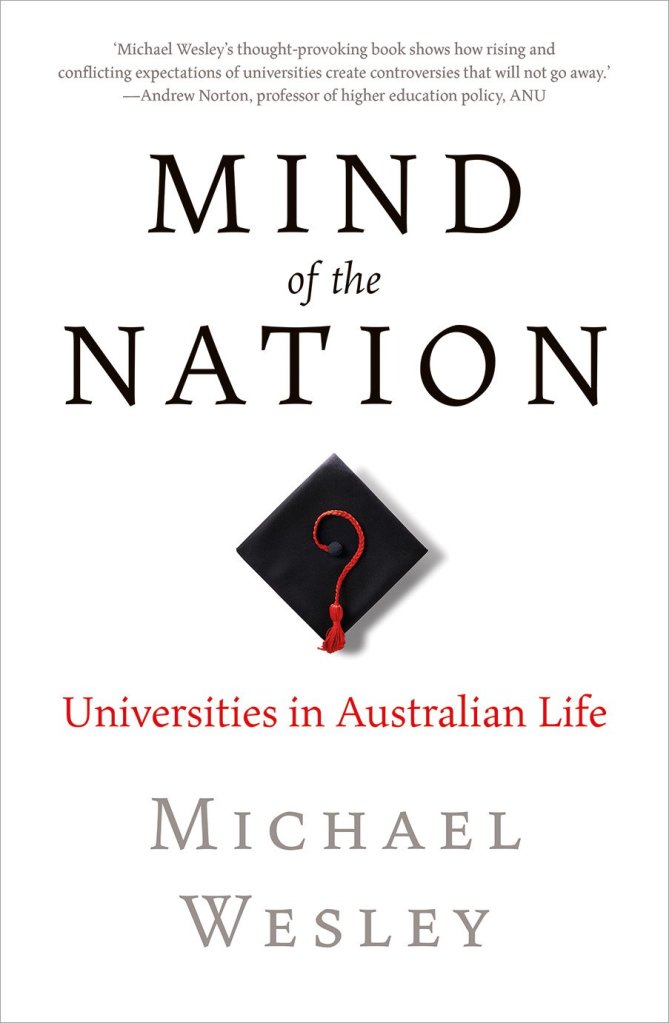
I blurbed Mind of the Nation, Michael Wesley’s new book on universities in Australian life, with the statement that it ‘shows how rising and conflicting expectations of universities create controversies that will not go away’. His book is about the cultural and political position of universities rather than higher education policy as such, although policy provides evidence of how politicians and voters see universities.

University administrators – Wesley is a deputy vice-chancellor – are at the centre of these controversies, blamed by all sides for whatever is wrong with universities. Mind of the Nation explores why universities receive so much critique and so little love or (from a university perspective) public funding, despite many successes and contributions: life-changing experiences for students, moving from an elite to a mass higher education system, creating a new export industry, large increases in research aimed at solving practical problems, and engagement with local communities.

Wesley asks why Australians admire the successes of their sporting teams, musicians and actors but not universities.

Read More »

Would free university increase or decrease higher education participation rates in Australia?

In a previous post I argued that Australia’s practice of charging fees for higher education reflects its broader patterns of taxation and public funding of social services.

But we have had free higher education before, 1974-1988. For a government already spending over $600 billion a year the cost of free higher education is not beyond the feasible range. I estimate costs at $4.6 to $5.9 billion a year on status quo numbers of student places in public universities. The range reflects uncertainties about how domestic students currently paying full fees would be handled. The $4.6 billion transitions currently Commonwealth supported students to free, while the $5.9 billion fully compensates universities for lost fee revenue.

Of the arguments for free higher education the one that people find most intuitive is that it would increase higher education participation. People consume more when prices go down. But somebody is paying – the government on behalf of taxpayers – and so how they would respond is the key variable in whether the number of students would go up or down.

Debt aversion

Supporters of free higher education often make demand-side arguments, that fees or loans are a deterrent to higher education participation, especially to people from disadvantaged backgrounds.

As someone with working class origins free higher education advocate Duncan Maskell says he would not have gone to university if he had to take out a loan. Occasional school student surveys have picked up similar sentiments. But the ‘debt aversion’ hypothesis has always had trouble distinguishing between sensible prudence around taking out debt that probably is not worth it (good debt aversion), and over-caution in taking out debts that would probably lead to significant long-term benefits (bad debt aversion).

Read More »

Why do Australian university students pay fees?

University of Melbourne VC Duncan Maskell secured some not always entirely positive media coverage today for his call to make university education free for domestic students.

University education is free or very cheap for students in some European countries and was also free in Australia between 1974 and 1988.

Why do countries differ on university fees?

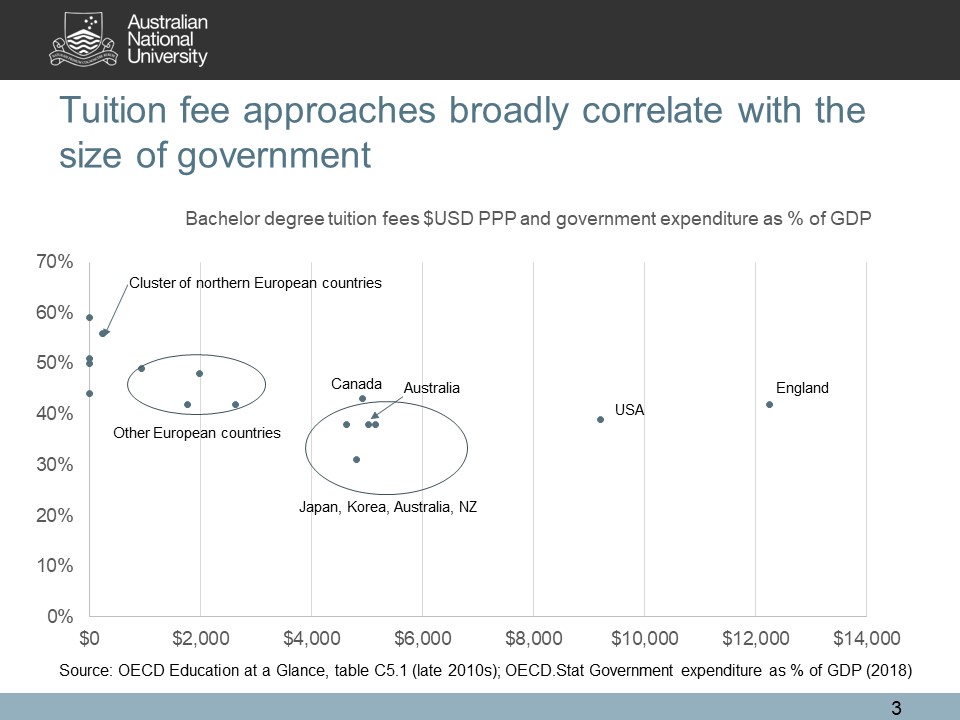
My theory of why countries differ on this issue draws loosely on the work of Julian Garritzmann. We observe broad coherence between higher education finance systems in each country and their overall tax and social service/benefits systems. The chart below shows patterns in the OECD. Australia is in a cluster of countries in our region with government expenditure below 40 per cent of GDP and quite similar fees in $USD purchasing power parity terms. The countries with free higher education tend to have governments that consume more than 50 per cent of GDP.

Read More »

The public-private balance: A failed rationale for setting student contributions

A previous post on the reasons given by government for setting student contributions, like this post based on a new paper of mine, listed five rationales used for implemented policies: course costs, private benefits, public benefits, increasing resources per student place, and incentivising course choices.

A sixth rationale has repeatedly been considered but never become policy, the idea that the distribution of benefits between public and private should drive the distribution of costs between public and private, as represented by the government and students. This post explains where this idea came from and why it has always been rejected.

Origins in the justification for HECS

As my earlier post noted, the public-private benefits idea first appeared in the Wran report that led to HECS. Its logic was not explained, but I think it was a corollary of the private benefits argument – that if students should pay for their higher education because they received private benefits then it seemed to follow that the government, on behalf of the public, should pay for the benefits they received. This is a normative argument about who should pay rather than an empirical claim that public subsidies produce public benefits.

The Wran report did not recommend this approach because calculating private and public benefits was too hard.

The balance metaphor

As part of the 1996 Budget the Howard government, with Amanda Vanstone as minister, introduced private benefits as a rationale for specific course contributions. Conceptually, however, this was quite different to the private-public benefits idea. The Vanstone version was the private benefits of a course relative to the private benefits of other courses, rather than the Wran private benefits of a course as a proportion of all benefits private and public or, at a system level, overall higher education private benefits as a proportion of all benefits.

Read More »