As explained in a previous post, former international students have a new possible employer-sponsored route to permanent residence via the Skills in Demand visa. But their options for points-tested visas are likely to decline.
In this post, I outline the points-tested visas, report on international student success in obtaining these visas, and describe the level of demand for them. I conclude with migration planning levels for 2026-27, which allocate fewer total places to points-tested visas.
In a following post, I will look at long-foreshadowed changes to points-tested visas and how these may affect international students.
What are points-tested visas?
The key idea behind points-tested visas is that applicants get ‘points’ for various attributes. The more points applicants accrue the more likely they are to get a visa. The theoretical maximum number of points from standard attributes across all three visas is 145. The minimum points to be eligible for a points-tested visa is 65.
But a specific number of points does not equal a visa. People who want points-tested visas submit expressions of interest. An EoI lasts for up to two years. Periodically the Department of Home Affairs invites people from the EoI pool to apply for a visa linked to listed occupations.
Three points-tested visas are currently available: the subclass 189 Skilled Independent visa, the subclass 190 Skilled Nominated visa, with the nomination by state and territory governments, and the subclass 491 Work Regional (Provisional) visa, also state and territory nominated. Some older visas are included in the data below: the subclass 489 Skilled Regional (Provisional) visa, which was replaced by the subclass 491 visa from November 2019, and the subclass 188 Business Innovation and Investment visa, which closed to new applicants on 31 July 2024.
International students and points-tested visas
As noted in my earlier post on international students and permanent residence, only former students moving directly from a student visa or a temporary graduate visa can be tracked using my main data source. This misses people who previously held a student-related visa but hold a different visa when seeking or receiving a points-tested visa. The figures presented are therefore at the lowest end of a range.
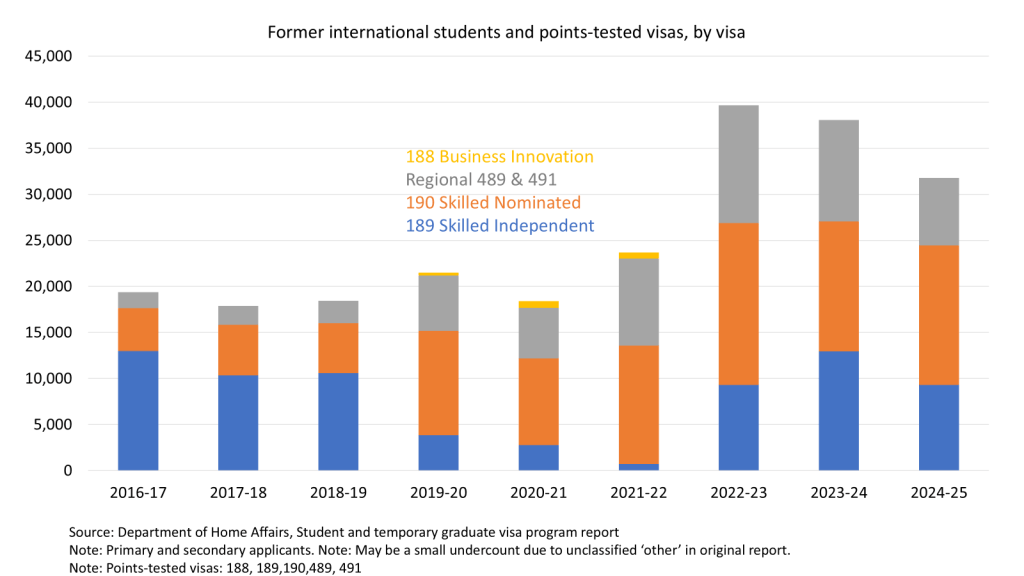
The subclass 190 Skilled Nominated visa is the most significant points-tested visa for international students. It has been the largest single category since 2019-20, on several occasions making up more than half the total. It was 48% of former international student visa grants in 2024-25.
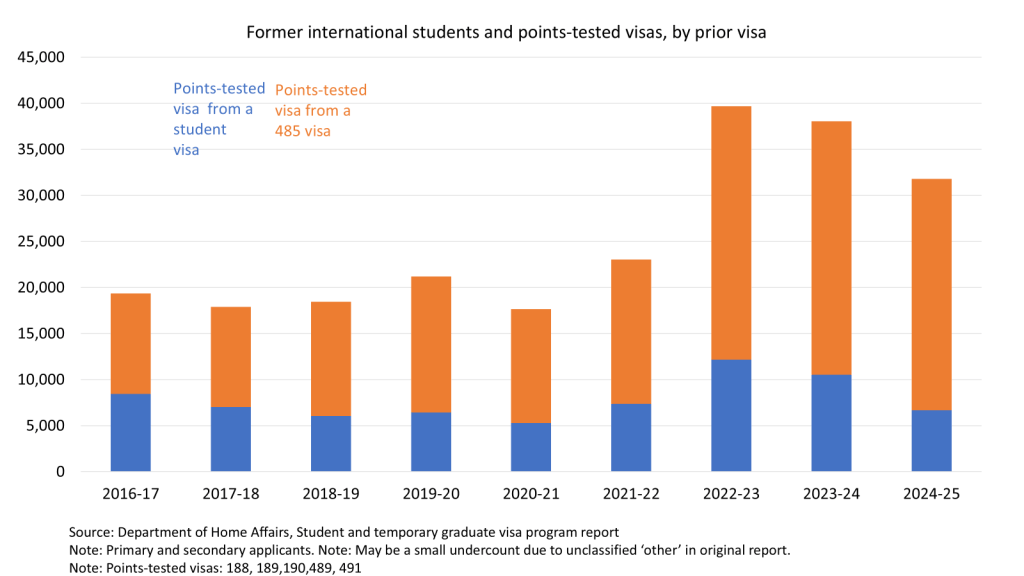
Most points-tested visas are subsequent to subclass 485 temporary graduate rather than subclass 500 student visas. That said, the absolute number of successful applicants moving from a student visa in 2024-25, 6,659, is in the normal range of annual visa grants 2016-17 to 2021-22.
Demand for points-tested visas
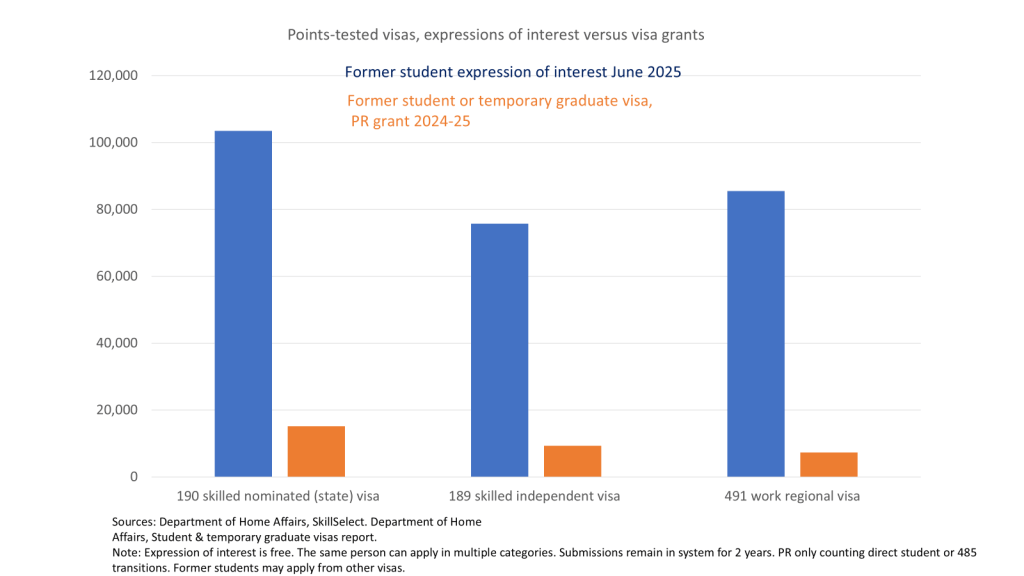
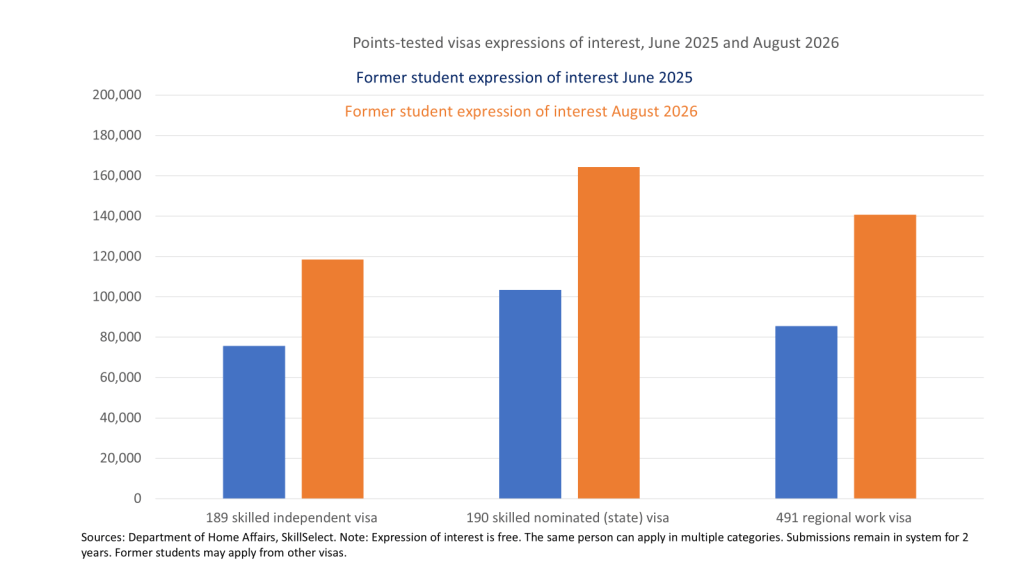
Former international students are identifiable in the EoI statistics because of the 5 points awarded for Australian study. The chart below shows former student expressions of interest for the points tested visas as of mid-2025 compared to visas granted to former students/former temporary graduate visa holders in 2024-25.
The chart does not compare like-for-like in a few ways. EoIs are from former students only while visa grants include secondary visa applicants, meaning a lower number of underlying primary applicants. EoIs stay in the system for two years, so some individuals counted in the blue bars may get a visa before or after 2024-25. The same person can put in an EoI for more than one point-tested category, or could also apply for a partner or employer-sponsored visa, if they became eligible. So the rate of getting a permanent or provisional visa, of any kind, is probably higher than this chart suggests. But clearly demand far outstrips supply for any given visa.
Increased demand for points-tested visas
Demand for subsequent visas is fuelled by the post-COVID surge in students and temporary graduate visa holders. The number of people on temporary graduate visas has more than doubled since late 2022, as seen in the chart below.
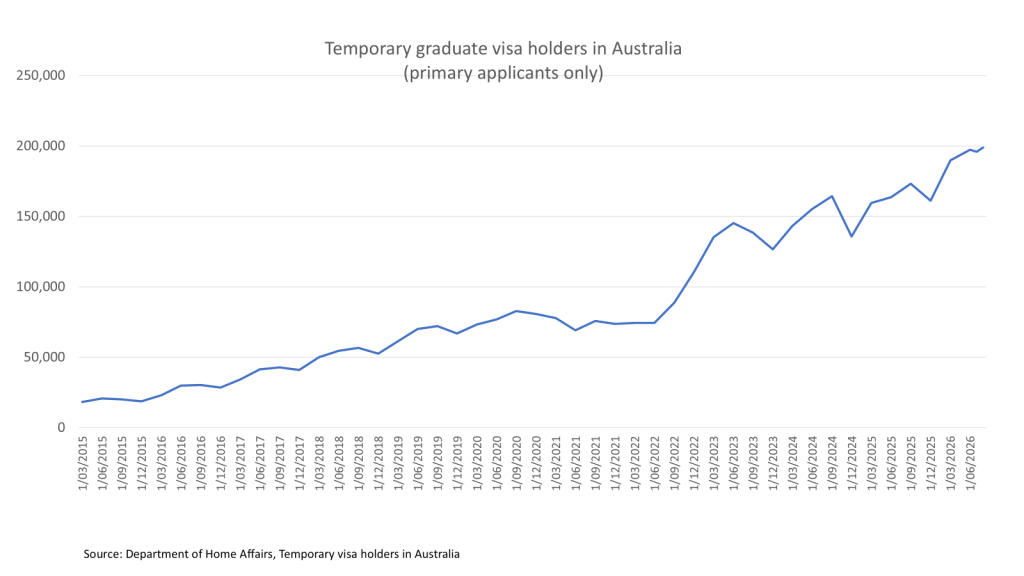
Reflecting the flow-through of post-COVID course completions and subclass 485 temporary graduate visas, between June 2025 and August 2026 the number of EoIs increased significantly. The 190 skilled nominated visa had 164,525 expressions of interest as of August 2026, a 59% increase since June 2025.
Decreased supply of points-tested visas
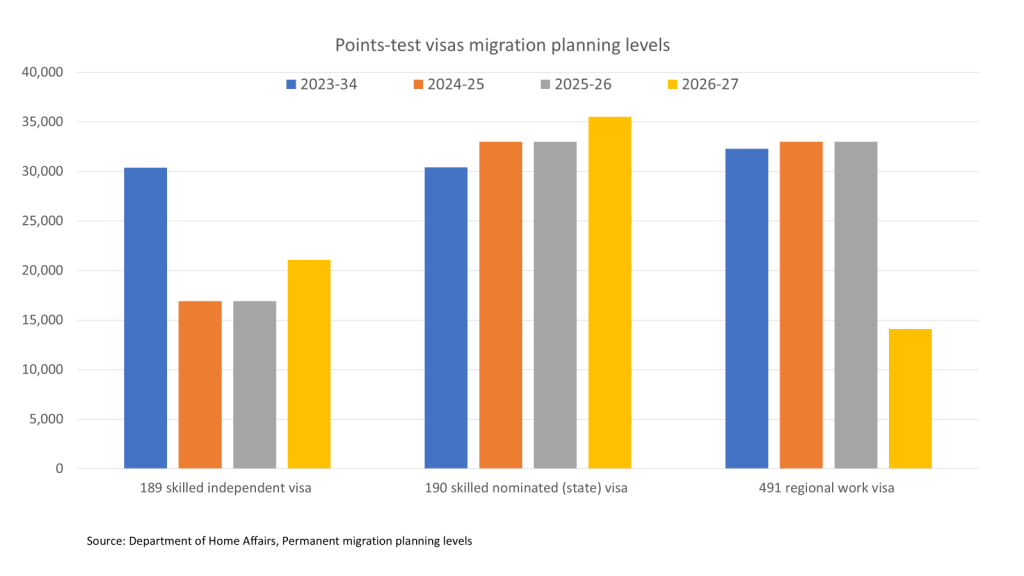
While the number of expressions of interest is up, the government has reduced the total number of points-tested visa grants in 2026-27 compared to recent years, driven by the subclass 491 regional work visa. After total planned places of 82,900 in each of 2024-25 and 2025-26, the planning level has dropped to 70,700 for 2026-27. However, the subclass 189 and subclass 190 categories, which delivered more places to international students in 2023-24 and 2024-25 than the subclass 491 visa, both have increased allocations for 2026-27.
In a subsequent post…
Increased former student demand for points-tested visas inevitably means lower success rates. But these could be reduced further with changes to the way points are awarded, which I will discuss in a subsequent post.

